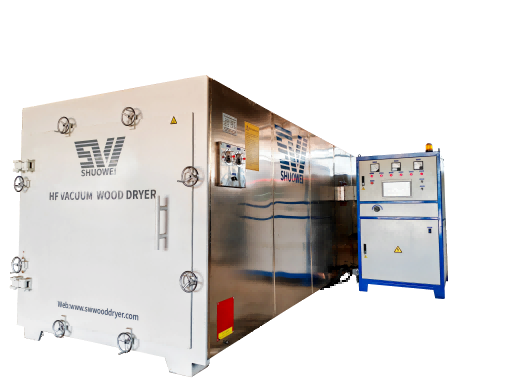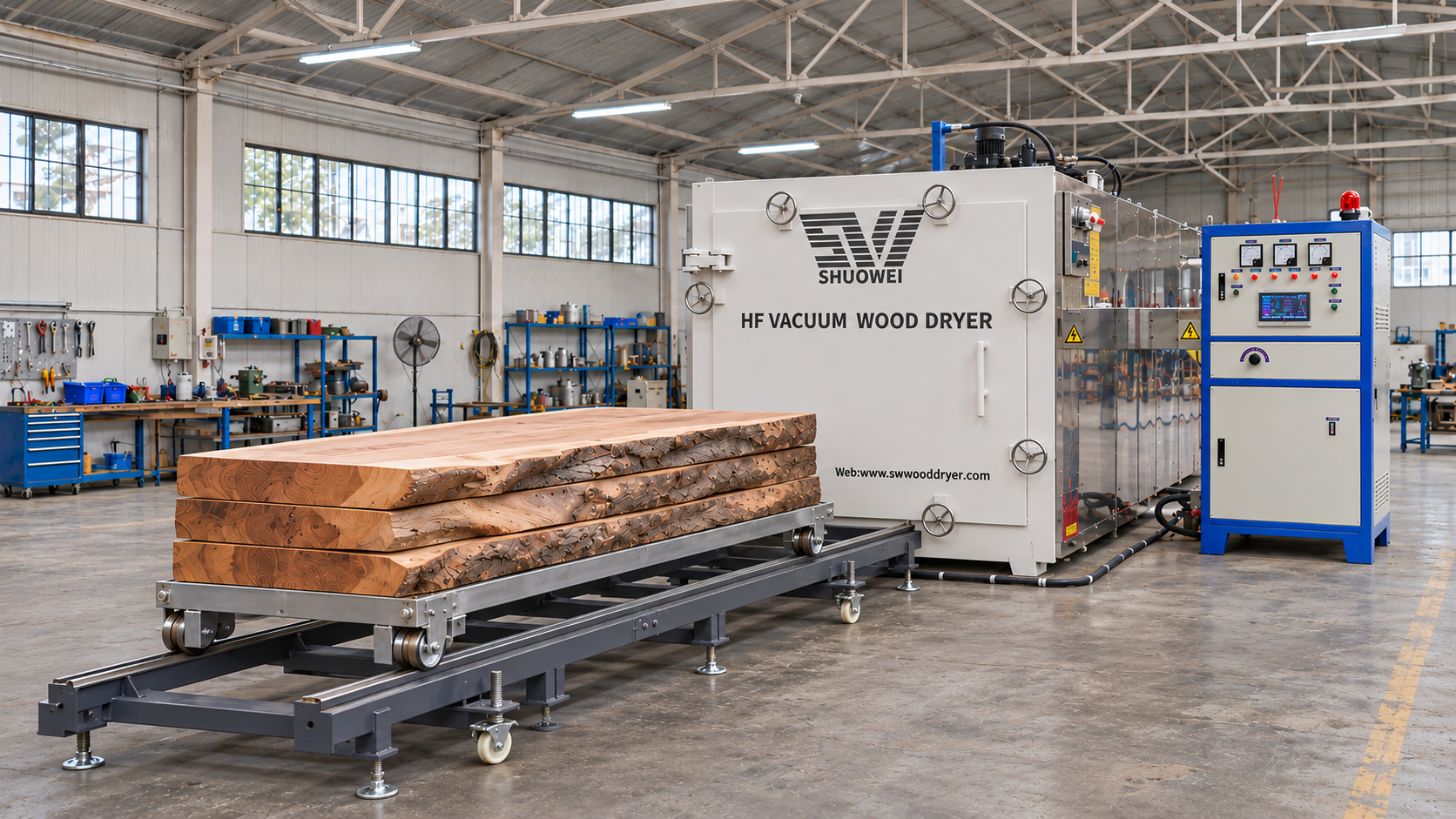
Dry Live Edge Slabs Up to 8–10× Faster While Protecting Your Slabs' Value
Factory-direct HF vacuum kiln systems from China, engineered around your slab dimensions, wood species and production goals.
Thick & wide slabs
A drying plan built around your real material.
Factory-direct support
One manufacturer from sizing to startup.
24-month warranty
Long-term technical and spare-parts support.
Tell us what you dry. Get a practical path from green slabs to saleable stock.
Get My Slab Drying PlanHF Vacuum Drying for Valuable Slabs
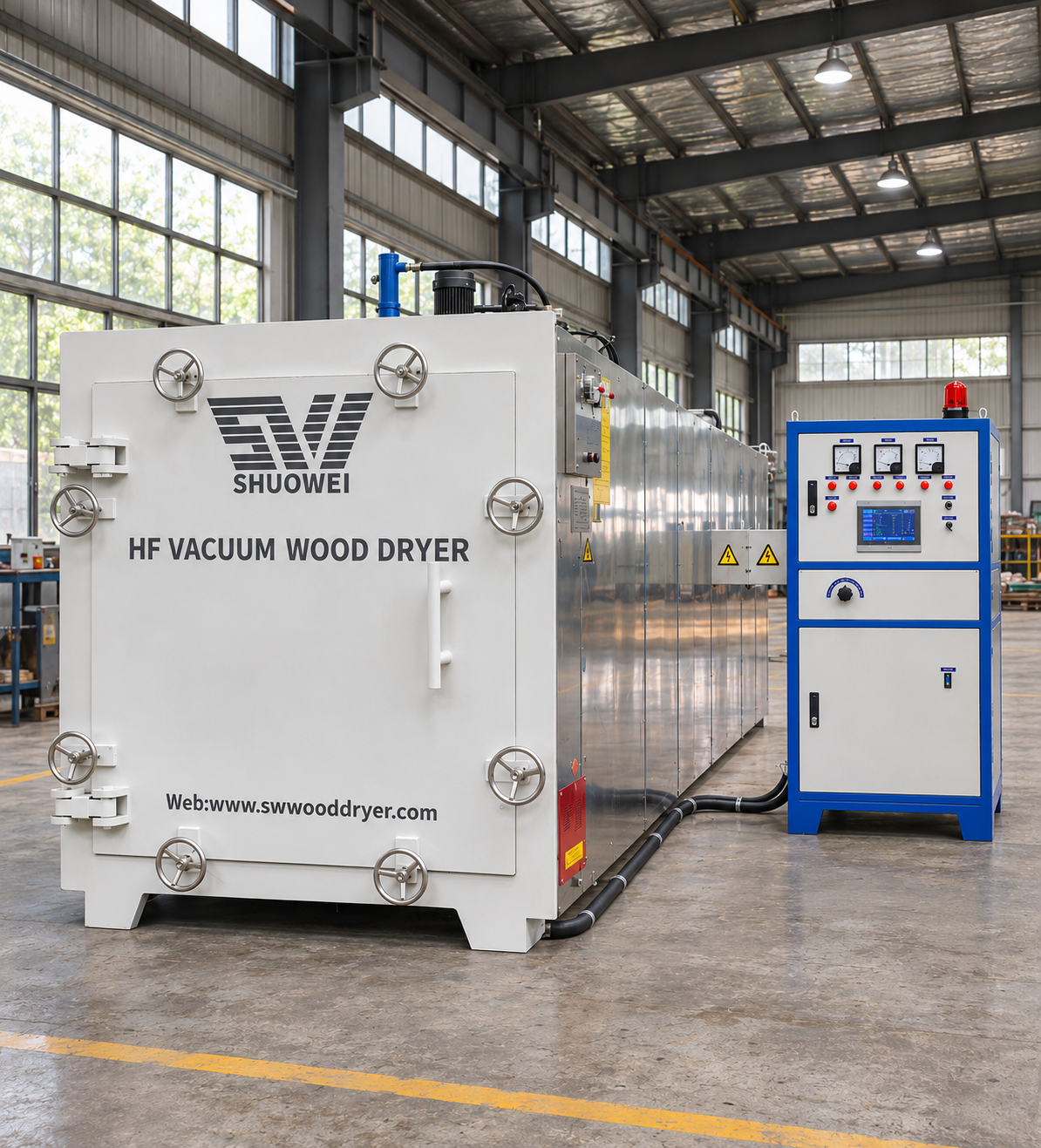
Internal high-frequency heating and controlled vacuum drying help you improve throughput while managing the risks that matter in thick, valuable wood.
Heat through the thickness
High-frequency energy heats the wood internally, helping moisture move from the core instead of relying only on surface heating.
Remove moisture under vacuum
Reduced pressure enables controlled lower-temperature drying, supporting color and quality in valuable hardwood.
Hydraulic Restraint to Help Control Distortion
Adjustable hydraulic top restraint helps control distortion when pressure and support are matched to slab shape.
Simplify daily handling
An electric trolley, approved stickerless stacking and PLC programs reduce loading and routine operating work.
See how the system fits your species, thickness and handling routine.
Explore My Kiln ConfigurationSize the Kiln to Your Slabs, Not Just a Model Number
Natural edges, maximum width and irregular batches all affect usable capacity. We work from your actual material and loading plan.
Length, width & thickness
Share your longest, widest and thickest slabs, including natural-edge contours.
Usable Loading Space
Check door opening, electrode layout, restraint clearance and trolley support together.
Partial and mixed loads
Review low-fill batches and compatibility before combining species or thicknesses.
Custom dimensions when needed
Oversize slabs can be assessed with transport, installation and the available site space.
Verify Core Moisture Content and Slab Quality
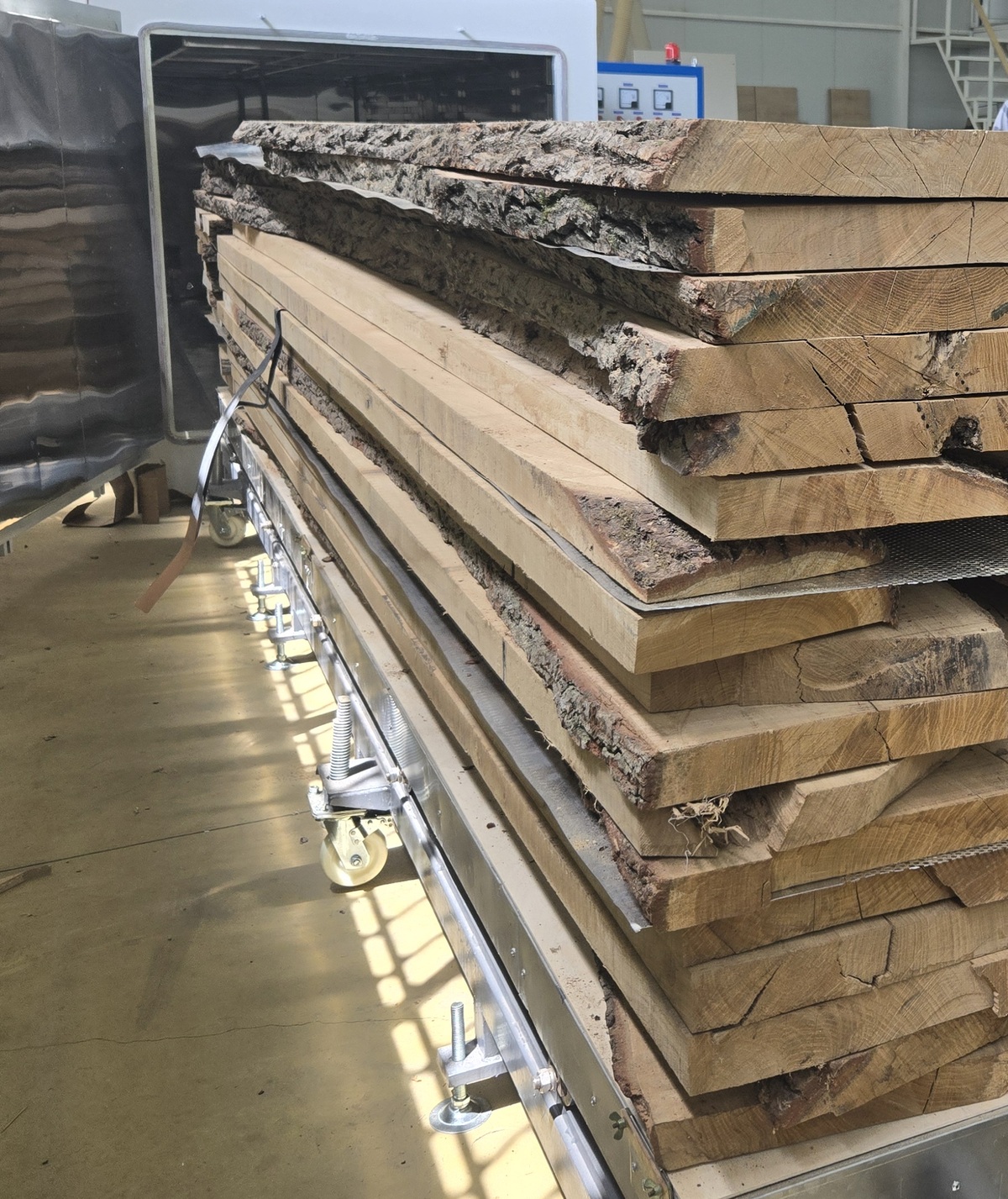
A useful drying result combines core and surface moisture checks with an assessment of defects and stability for the intended use.
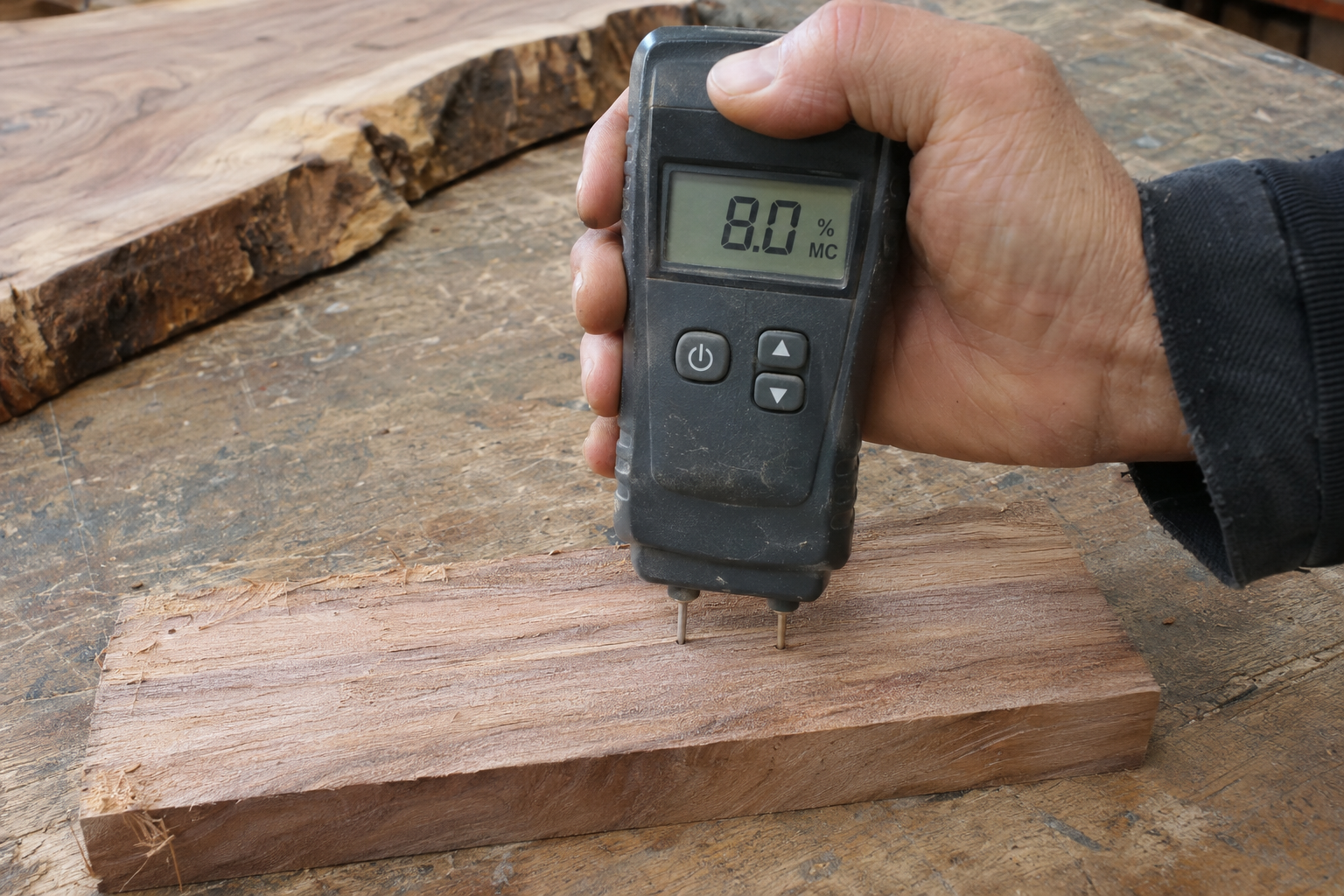
Check the moisture profile
Agree a sampling method and compare representative core and surface moisture, rather than relying on a single face reading.
Inspect for Drying Defects
Assess checking, internal splits, distortion and color against the acceptance criteria for your species and thickness.
Match Moisture Content to the End Use
Set the moisture target for the destination climate and end use, then include conditioning and machining stability in the review.
Representative Drying Results
Serbia
European Oak
12 days
- Thickness
- 50 mm
- Moisture
- 60–65% → 6–8% MC
Indonesia
Mahogany
12 days
- Thickness
- 75–150 mm
- Moisture
- 60–65% → 6–8% MC
Mississippi, USA
Yellow Pine
5 days
- Thickness
- 50 mm
- Moisture
- 56–65% → 7–9% MC
HF Vacuum Drying for Slab and Woodworking Businesses
HF vacuum drying supports businesses that turn distinctive hardwood into saleable slabs, tabletops and specialty stock.
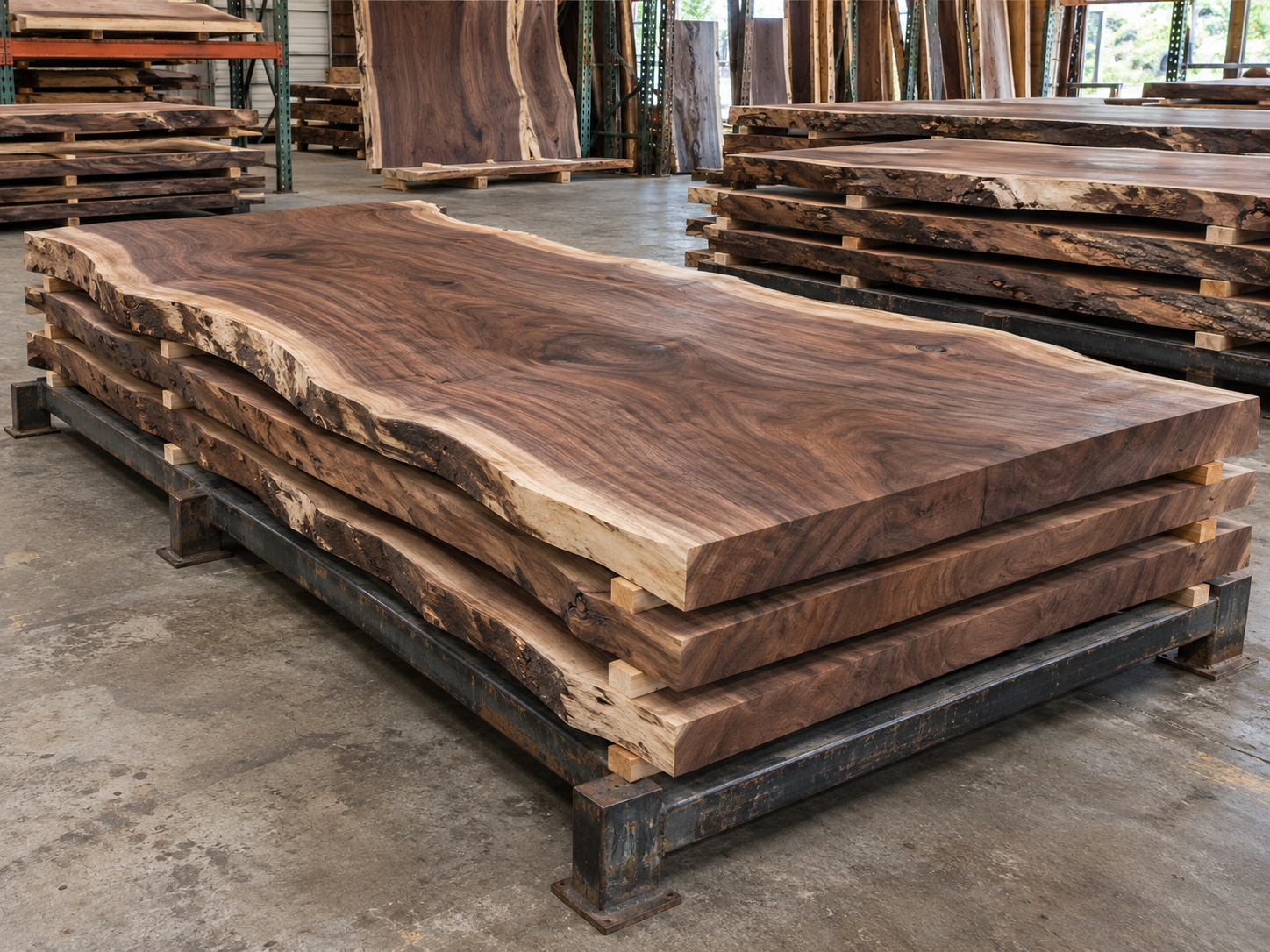
Live edge slab suppliers
Prepare walnut, oak and other premium slabs for buyers who need dependable moisture and a clearer delivery schedule.
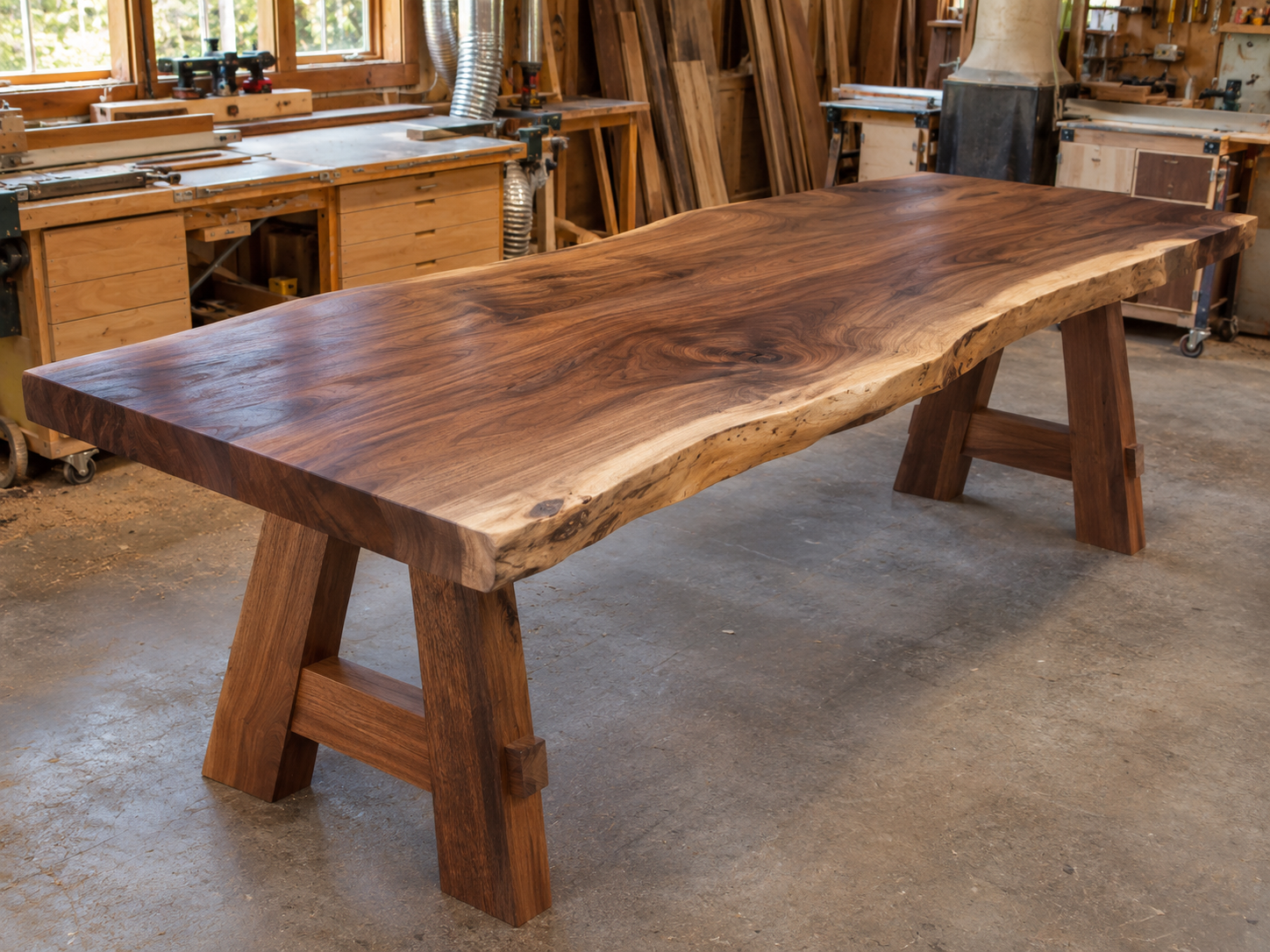
Custom table & furniture workshops
Bring valuable, self-dried slabs closer to flattening and fabrication with a process matched to the final product.
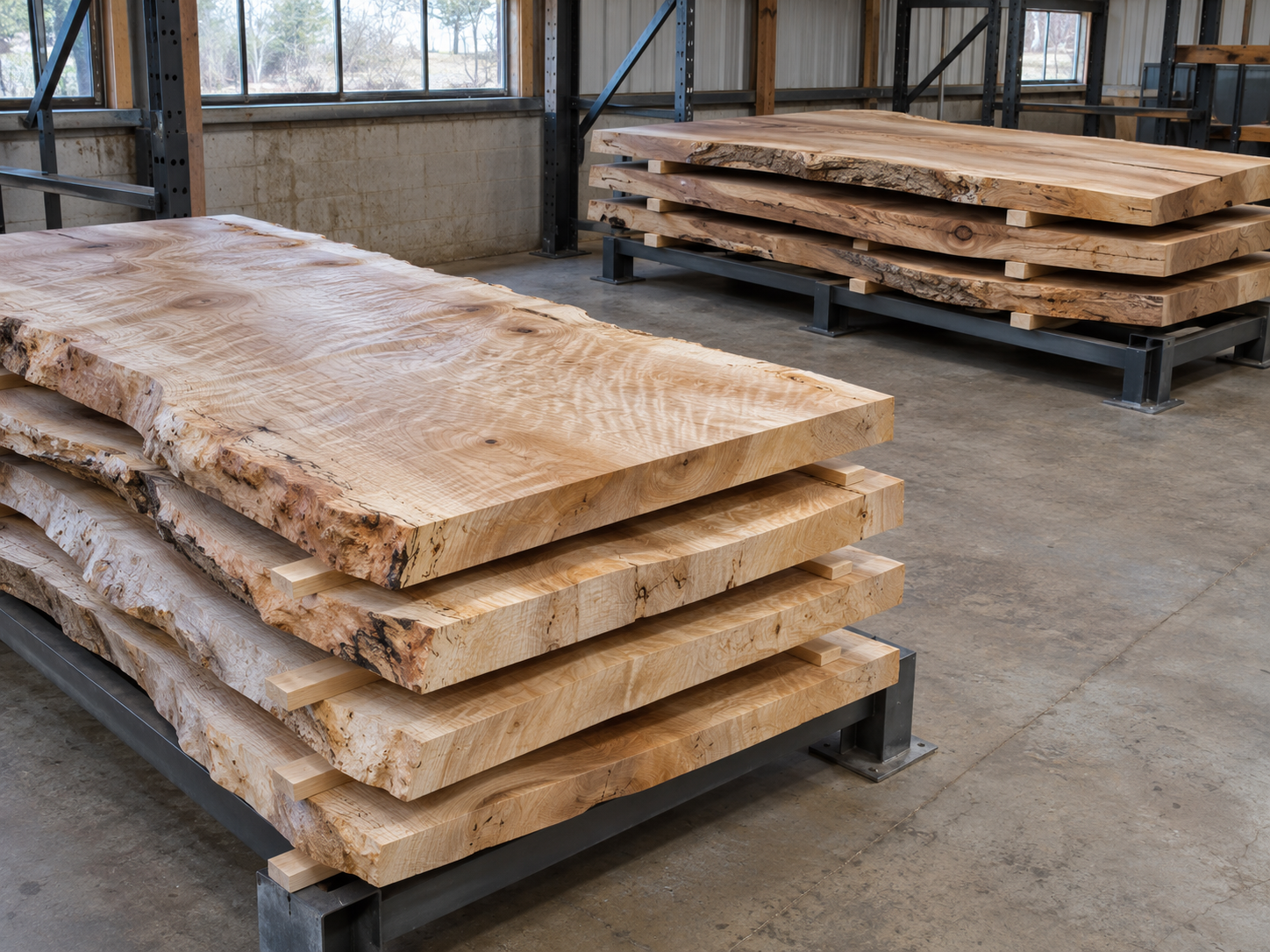
Specialty Hardwood Processors & Drying Service Providers
Assess small, valuable batches and local drying-service demand with a kiln sized to the work you can reliably handle.
Tell us what your slabs become. We will start with the drying needs behind the product.
Find My Slab Drying Application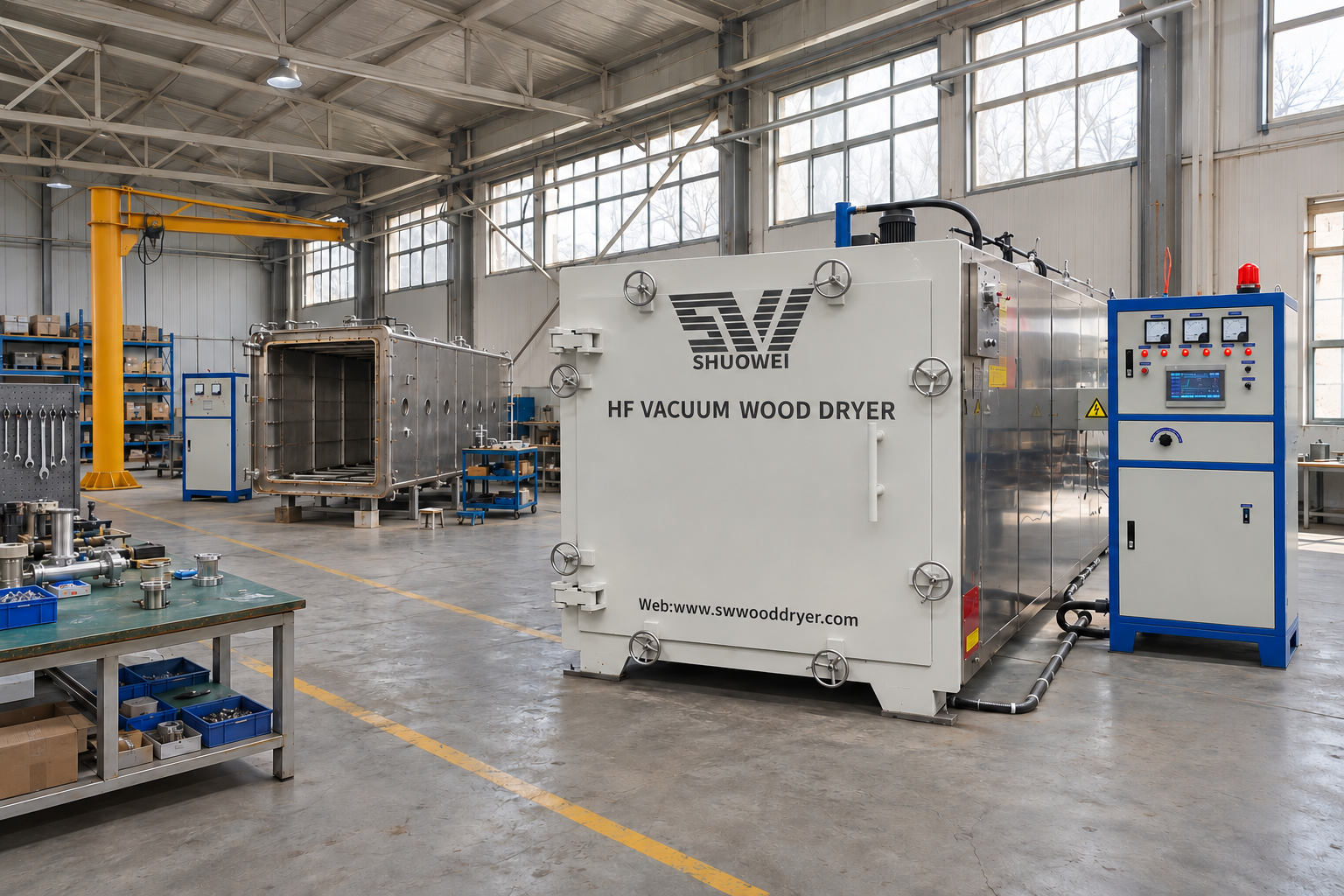
Work Directly with the Team That Builds Your Kiln
Shuowei connects slab-specific engineering, equipment manufacturing and long-term service through one China-based manufacturer.
30+ Years of HF Wood Drying Experience
Engineering experience is applied to your species, slab dimensions, drying target and handling needs.
See the manufacturing process
Arrange a continuous factory video review covering similar equipment, assembly, test areas and machine identification.
CE Documentation & Factory Checks
Review the CE documentation applicable to your proposed model and machine-specific factory acceptance checks. One manufacturer coordinates configuration, release and long-term support.
See the people, process and equipment behind your proposed drying system.
Arrange a Factory Video ReviewCan You Test Your Slabs Before Choosing a Kiln?
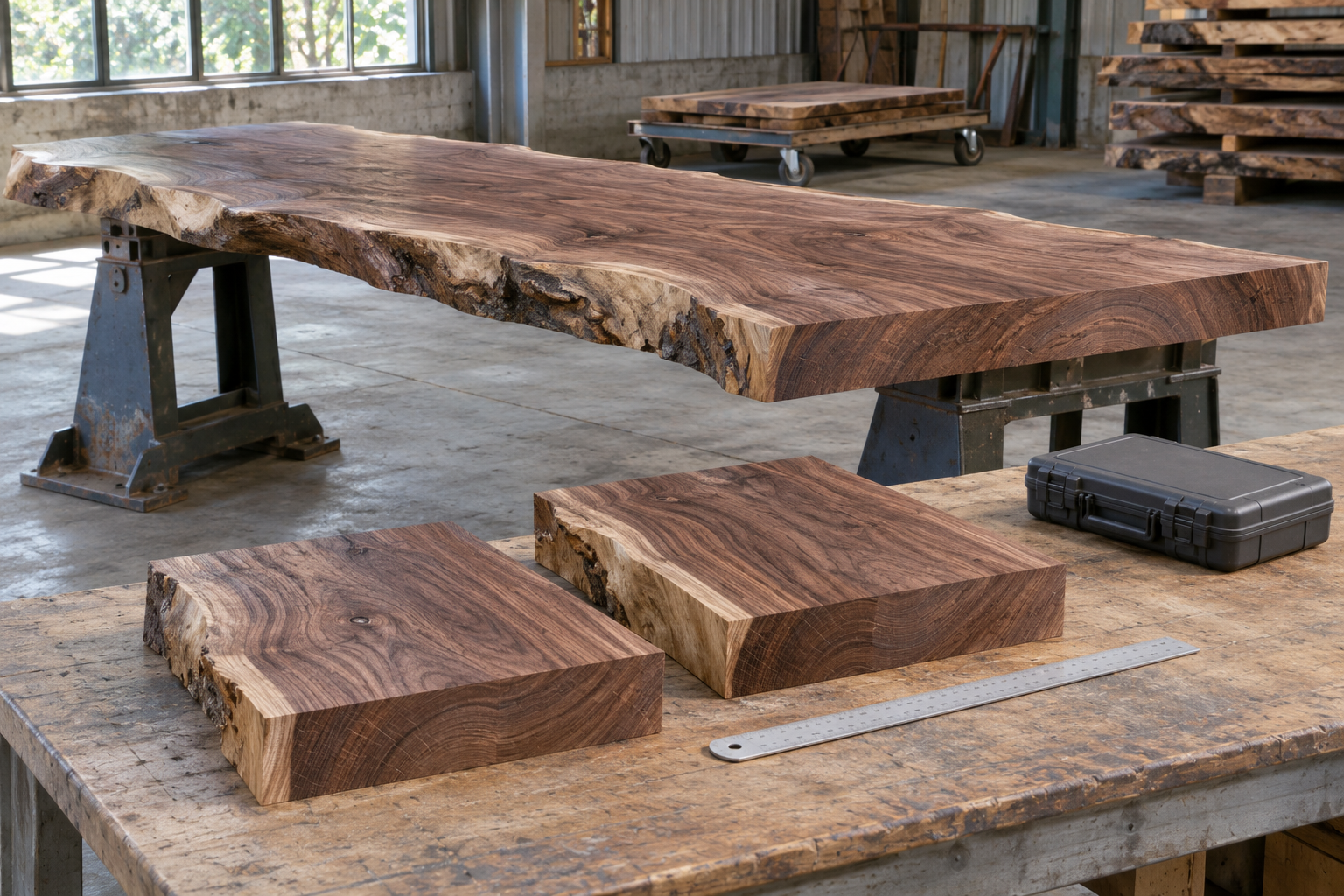
Start with wood that reflects your real production, agree what success means and use the results to refine the equipment and process.
Share Your Slab Specifications
Identify species, dimensions, starting moisture, target moisture and the business problem to solve.
Agree on the Test Criteria
Define sampling, moisture profile, visible and internal defects, color and stability checks.
Run and record the trial
Use an agreed loading arrangement and process while collecting the relevant operating and wood-quality records.
Review the result together
Connect the findings to usable capacity, the proposed configuration and the operating plan for your site.
Before shipment, the equipment also receives its own factory acceptance checks covering mechanical operation, vacuum, cooling, electrical functions and protection systems.
From Site Preparation to Your First Drying Batch
Plan electrical supply, cooling and installation early, then bring your team up to speed with manufacturer-led startup and ongoing support.
25–35 days
Typical production lead time
After deposit; timing is confirmed for the model, customization and factory schedule. Shipping and installation are arranged separately.
Site & utilities review
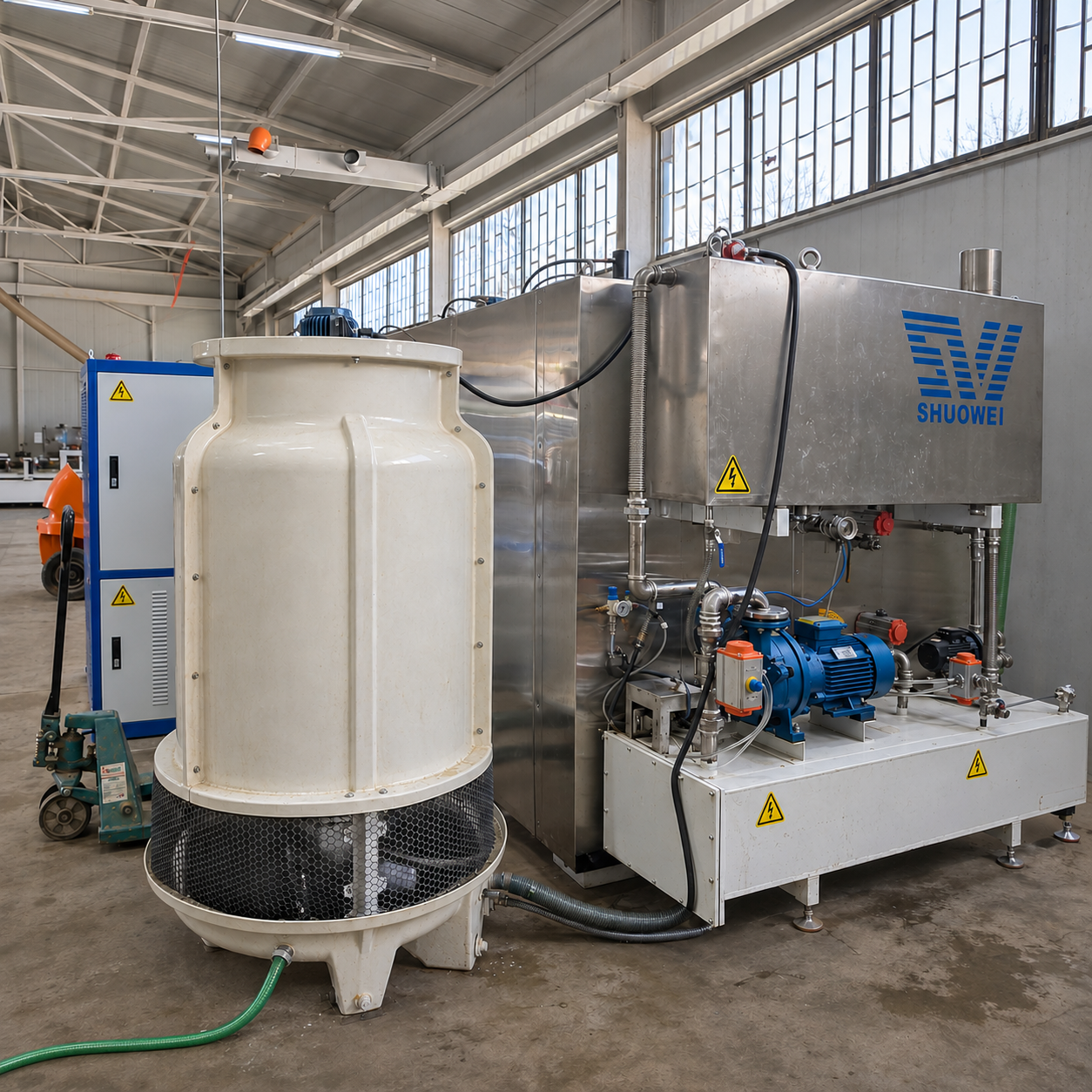
Confirm voltage, frequency, available power, cooling conditions, access and floor space before the configuration is frozen.
Installation & startup guidance
Coordinate positioning, utility connections, checks and the first operating program with your site team.
Operator & maintenance training
Build a practical routine for loading, operation, safety checks, upkeep and fault reporting.
24-Month Warranty & Lifetime Technical Support
Stay connected to the manufacturer for technical assistance, maintenance advice and spare-parts support.
Get a Drying Plan and Kiln Quote for Your Slabs
Share your wood and production goals. Receive a kiln recommendation, loading review, site checklist and project quotation from Shuowei.