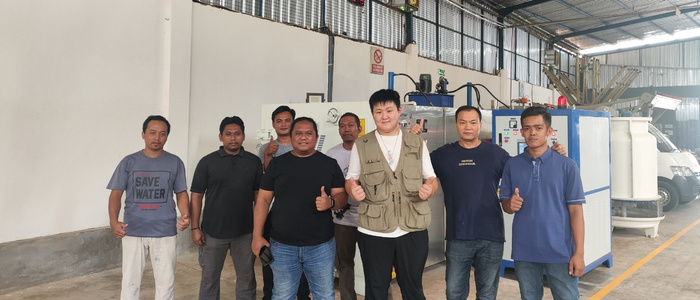
When we first spoke with this customer in Indonesia, their situation was actually very common.
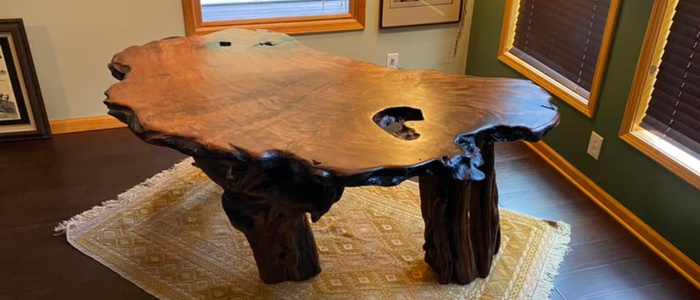
They were working with teak—high-value material, but not easy to handle.
Drying was taking too long, and even after weeks, the results weren’t always stable.
Sometimes the moisture wasn’t even. Sometimes cracks showed up later during processing. Nothing unusual—but definitely frustrating.
They weren’t just looking for a machine. They wanted a more reliable way to dry teak.
From Installation to First Run
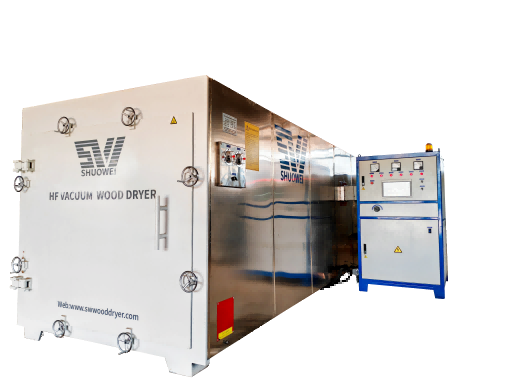
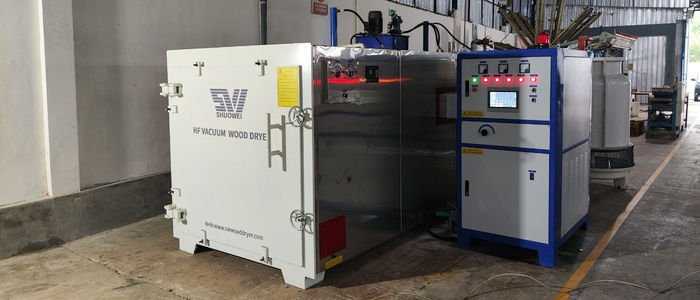
We installed a SWKD-4.0 high frequency vacuum kiln system at their facility in September 2025.
The capacity is around 4.4 cubic meters, which fits well for medium-scale production.
What mattered more, though, was getting everything running smoothly from day one.
Our engineer worked on-site with their team:
- Setup and calibration
- Step-by-step operation training
- First drying cycle together
By the time we finished, they were already comfortable running the system on their own.
The First Drying Cycle (This Is What Really Matters)
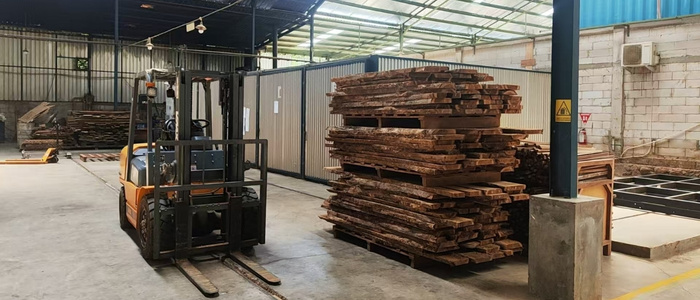
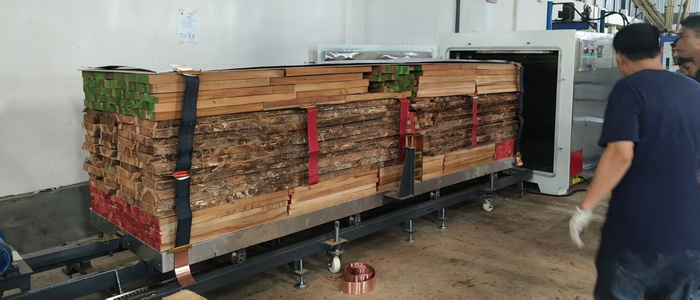
For the first batch, they used freshly cut teak.
- Starting moisture content: over 80%
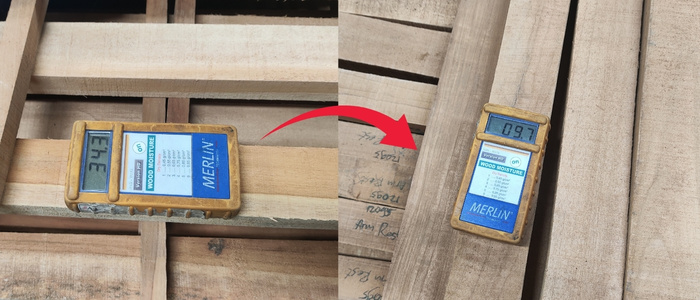
- Target: around 10–12%
They were curious—but also a bit skeptical.
That’s normal.
After running the cycle, the result was: 8 days to reach the target moisture content
No visible cracking.
No serious deformation.
Moisture distribution was consistent.
That’s usually the moment when expectations change.
This is the kind of performance you can expect from a high frequency vacuum wood kiln
Why This Worked Better Than Their Previous Method
Before this, they were relying on more traditional drying approaches.
The biggest difference they noticed wasn’t just speed—it was control.
With vacuum kiln drying:
- Heat is generated inside the wood
- Moisture moves out more evenly
- The process runs under lower temperature conditions
Which means:
less stress inside the wood
fewer defects later on
For teak, that makes a big difference.
You can learn more about this vacuum kiln for hardwood drying.
What the Customer Said
During commissioning, our engineer Boris worked closely with their team.
After everything was up and running, the customer shared something simple but meaningful:
“Boris is a very responsible person. Young, but with solid professional knowledge. He helped us set everything up and made it run smoothly.”
It’s not a long review—but it says what matters.
Why More Teak Producers Are Moving This Way
In places like Indonesia, where teak is a major resource, drying is often the bottleneck.
Not cutting.
Not machining.
Drying.
And when drying takes weeks or months, it affects everything:
- Production speed
- Order delivery
- Cash flow
That’s why more manufacturers are starting to look for faster and more predictable solutions.
Vacuum kiln technology is becoming a practical choice—not just a “high-end option”.
If You’re Dealing With Similar Challenges
If your situation sounds familiar, slow drying, inconsistent results, material loss. Then it might be time to rethink the process.
A high frequency vacuum kiln won’t solve everything overnight,
but it can remove one of the biggest bottlenecks in wood processing.
If you want to see whether it fits your production, just reach out. We’re happy to walk through it with you. Get a customized wood drying solution now!